
The psoas muscle is more than just a deep core stabilizer—it’s deeply involved in posture, emotional holding, and the body’s fight-or-flight response. When this muscle holds tension, it can contribute to chronic pain, anxiety, and a lack of grounding. This blog explores how CranioSacral Therapy gently supports psoas release, balances the pelvic area, and helps restore your nervous system’s sense of safety.
Understanding the Psoas
The psoas major is one of the deepest muscles in the human body, located near the spine and pelvis. It originates from the lower thoracic and lumbar vertebrae (T12–L5) and extends through the pelvis to attach at the top of the femur (thigh bone). While commonly associated with hip flexion—like walking or bending forward—the psoas does much more than that.
The psoas is intimately connected to our posture, movement, breath, and sense of safety. It stabilizes the spine, supports the organs of the lower abdomen, and influences the position of the diaphragm, affecting how we breathe.
More than a mover, the psoas plays a vital role in how we hold stress, fear, and trauma in the body.
Why It’s Called the “Muscle of the Soul”
In many somatic and spiritual traditions, the psoas is known as the muscle of the soul. This is not just poetic. Because of its deep anatomical position and its role in the body’s stress response, the psoas often holds unresolved emotional tension, especially from past fear, overwhelm, or trauma.
The psoas is part of our primitive survival system. It reacts instantly to perceived threat by contracting, preparing the body to fight, flee, or freeze. Over time—especially when stress becomes chronic or the body doesn’t get to complete its stress cycle—this muscle can stay tight and hyper-vigilant.
This unresolved contraction can contribute to a host of physical and emotional symptoms:
- A feeling of being “on edge” or disconnected from one’s center
- Chronic pelvic or lower back pain
- Hip stiffness
- Digestive discomfort
- Shallow or restricted breathing
- Anxiety or restlessness
- Emotional dissociation or lack of grounding
The Psoas and the Pelvic Area: A Deep Relationship
The psoas moves through the pelvic basin, influencing not just muscles and bones, but also the viscera (organs), fascia, and nervous system centers located in the pelvis.
A tight or imbalanced psoas can:
- Pull on the lumbar spine or tilt the pelvis
- Restrict mobility in the sacroiliac joints
- Increase tension in the pelvic floor muscles
- Contribute to pain or discomfort in the reproductive and digestive systems
Importantly, the pelvic area is a core center of safety, grounding, and embodiment.
When the psoas is tight, the entire lower body may feel unsettled, disconnected, or stuck in a survival pattern. This can make it harder to rest, sleep, digest, or connect with others.
The TMJ–Psoas Connection
Though they may seem far apart, the jaw (TMJ) and the psoas are intricately connected through the body’s fascial and energetic web.
- Fascial Chains: Myofascial lines run continuously from head to toe. Tension in the jaw can create restrictions that travel down through the neck, spine, and into the pelvis—impacting the psoas.
- The Pterygoid–Psoas Relationship: The pterygoid muscles, located deep within the jaw, are often tight in people with TMJ dysfunction or jaw clenching. Releasing these muscles through gentle intraoral CST work can have a ripple effect—softening tension all the way down to the pelvic floor and psoas.
- Emotional Holding Patterns: Both the psoas and the jaw are key areas where we “brace” under stress. Supporting release in both areas can bring a profound sense of ease and emotional freedom.
How CranioSacral Therapy Can Help
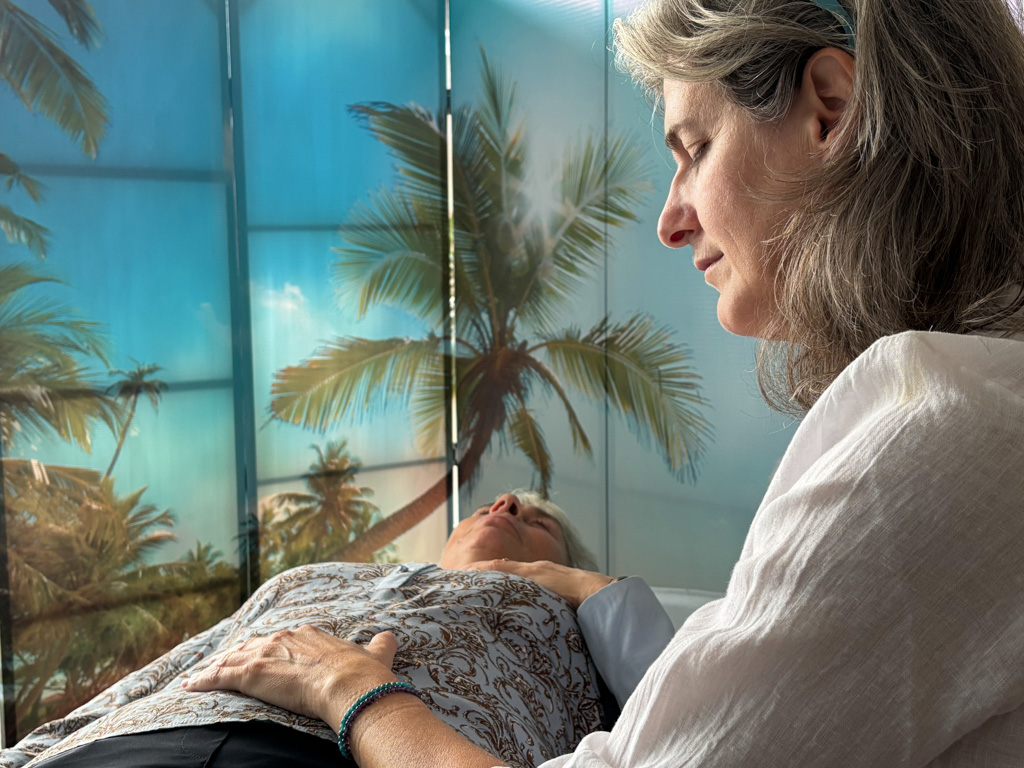
At Serena CranioCare, I use CranioSacral Therapy (CST) to help gently release tension stored in the psoas—not by stretching or manipulating it directly, but by creating a deep, receptive space where the nervous system can soften and reset.
Here’s how CST can support psoas release:
- Soothing the Nervous System: When the body feels safe and deeply listened to, it begins to unwind on its own. This is where true healing happens—from within.
- Balancing the Pelvis and Sacrum: Through light touch, CST addresses the bony and fascial structures around the pelvis, where the psoas is anchored.
- Supporting Embodiment and Grounding: As pelvic tension releases, clients often report feeling more present, steady, and connected to their lower body and breath.
- Listening to the “Inner Body”: Clients often experience a deep sense of inner stillness and awareness. In this state, long-held emotions may gently surface and resolve, allowing both body and mind to find rest.
What Clients Often Report After Psoas-Focused CranioSacral Work:
- Relief from lower back, pelvic, and jaw pain
- Improved posture, mobility, and core stability
- Better digestion and breathing
- Reduction in stress and anxiety
- A renewed sense of inner safety, emotional release, and connection to self
What to Expect in a Session At Serena CranioCare:
- Fully clothed, resting on a treatment table in a quiet space
- I use light, intentional touch to engage the craniosacral system
- The session may include work on the pelvis, diaphragm, sacrum, jaw, or other areas as guided by your body
- You may feel warmth, subtle movement, release, or emotional shifts
- Every session is a co-creative space—where your body leads the way, and I follow with deep respect your body’s inner wisdom.
There may be moments of stillness, warmth, gentle unwinding, or emotional release—all held within a safe and compassionate environment.
Ready to Reconnect With Your Core and Let Go of Deep Tension?
Whether you’re experiencing pelvic or jaw pain, chronic tension, psoas-related discomfort, or emotional overwhelm, CranioSacral Therapy offers a gentle and powerful path to reconnection.
Book a session or reach out with questions—I’d be honored to support your journey.