
Welcome to Serena CranioCare.
If you’re curious about CranioSacral Therapy (CST) and whether it can help you feel more at ease in your body, you’re in the right place.
In today’s fast-paced world, we often carry layers of stress, tension, and unprocessed emotions in our bodies without even realizing it. CranioSacral Therapy (CST) offers a gentle, yet deeply powerful way to release those layers—helping the nervous system unwind, pain soften, and our sense of self return to center.
A Gentle Approach That Goes Deep
CST is a light-touch, hands-on therapy that works with the body’s natural healing intelligence. It supports physical, emotional, and energetic well-being by listening to the body at its own pace. Through stillness, presence, and subtle adjustments, CST invites deep healing to unfold.
Our bodies hold stories. Pain, stress, trauma, and overwhelm can become “stuck” in the tissues, affecting our nervous system, immune function, posture, and even our relationships. CST helps release these imprints in a safe and non-invasive way.
During a session, I use a light touch—no more than the weight of a coin—to connect with the craniosacral system, which includes the membranes and fluid surrounding the brain and spinal cord. This system mirrors the state of your entire being and holds the blueprint for healing and balance.
Inspired by Multiple Traditions
My approach is grounded in the Biodynamic Craniosacral Therapy model taught at the College of Craniosacral Therapy in London (CCST) and enriched by continued training with the Upledger Institute. While these schools of thought differ in emphasis and style, they are united by the belief that healing happens when we listen deeply to the body—without forcing or fixing.
- The Biodynamic approach, shaped by pioneers like Franklyn Sills, invites the practitioner to attune to the slow, subtle rhythms of the body—such as the craniosacral tide and the deeper “long tide” of life force. This approach emphasizes the inherent health within each person and works with the natural motion of the body’s fluids and tissues to allow healing to emerge from within. There is a strong focus on the quality of presence, neutrality, and trust in the body’s wisdom. Sessions often feel spacious, meditative, and deeply grounding—bringing the client into a profound state of rest and regulation.
- The Upledger method, developed by Dr. John Upledger, takes a more anatomical and technique-based approach, using light touch to gently assess and release restrictions in the craniosacral system. While structured and technique-oriented, it is also deeply intuitive and holistic—guided by the body’s “inner physician” or inner wisdom, which knows where healing is most needed. The practitioner follows this wisdom with curiosity and respect, creating space for the body to self-correct, let go of held trauma or tension, and return to balance.
A key element of the Upledger method is SomatoEmotional Release (SER)—a process that recognizes how unresolved emotions and past traumas can be stored in the body’s tissues. Through gentle facilitation, the practitioner supports the client in accessing and processing these stored experiences in a safe and supported way, without analysing them. SER allows the body and psyche to release what is no longer needed, often resulting in a sense of clarity, lightness, or emotional relief. It is particularly powerful for clients dealing with complex stress patterns, chronic pain, or emotional overwhelm, as it helps reestablish harmony between the physical, emotional, and energetic layers of the self.
- The No Mind approach, developed by Etienne Peirsman, adds yet another layer of depth. Rooted in both biodynamic principles and Eastern meditative traditions, this perspective emphasizes the quality of being rather than doing. It invites both client and practitioner into a state of spacious presence—what Peirsman refers to as the “No Mind” state—where there is no agenda, no effort to fix, and no attachment to outcome. In this state of inner stillness and surrender, the body’s natural intelligence can come forward in its own time, revealing what is ready to shift or be met. It’s an approach that honors pure consciousness and the silent space in which healing and transformation occur—not through intervention, but through presence. This orientation can open doorways not only for physical healing but for deep emotional release and inner clarity. It helps clients reinhabit themselves gently, with trust and authenticity, and is especially supportive for those feeling overwhelmed, fragmented, or seeking a deeper connection with their inner essence.
All three approaches—Biodynamic, Upledger, and No Mind—value deep listening and trust in the body’s intelligence. Whether following the body’s quiet rhythms, using targeted techniques, or resting in open awareness, they create a safe and sacred space where profound healing can gently unfold.
Who I Am
After over 15 years of international experience in humanitarian and education programs, my life took a transformative turn. I became the full-time caregiver for my partner after he suffered severe brain damage, resulting in profound physical and cognitive disabilities. That deeply personal journey awakened in me a new path—one rooted in healing, empathy, and connection.
I trained at the College of Craniosacral Therapy in London and continue my learning through Upledger and other integrative, body-centered approaches. Today, I bring this blend of professional expertise and personal experience into every session I offer.
What to Expect in a Session
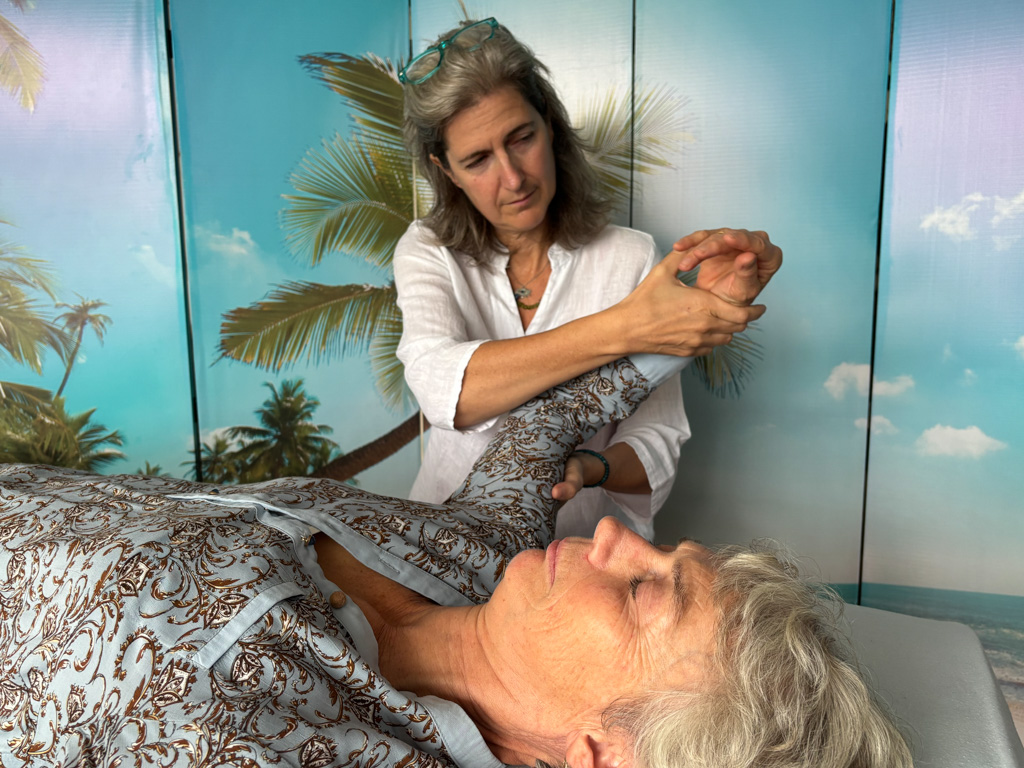
Each session is unique. You’ll remain fully clothed, lying comfortably on a treatment table. My hands may rest lightly on your head, back, sacrum, or feet. Many clients report feeling deeply relaxed or sensing internal movements, emotions, or insights. These subtle shifts are all part of your body’s natural release process.
Some sessions feel quiet and grounding; others bring emotional release or insight. All are welcomed with presence and without judgment.
Ready to Experience It?
CranioSacral Therapy isn’t about fixing—it’s about allowing. It offers a respectful, intuitive way to meet whatever you’re holding and gently support its release. Whether you’re navigating stress, pain, TMJ issues, trauma, or simply seeking reconnection with yourself, CST creates a safe space to listen and heal.
With warmth and presence,
Serena